

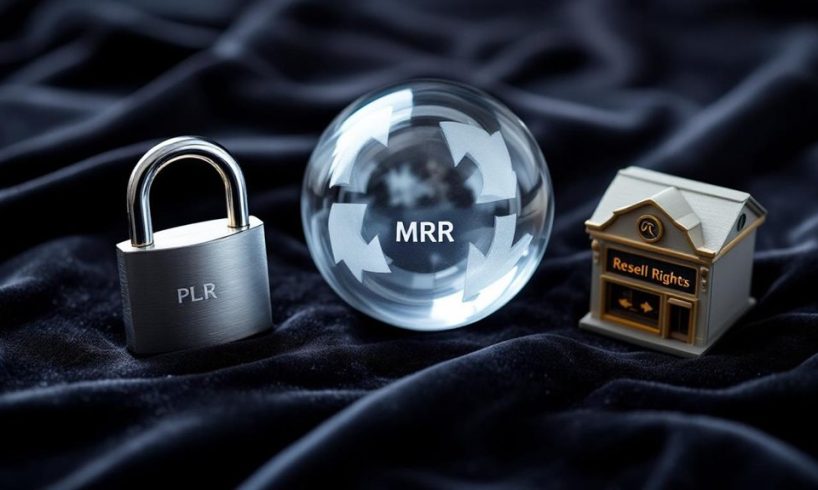
Like peeking behind a curtain at a fixer-upper market, PLR, MRR, and resell rights show you what you can tweak, claim, or sell. You’ll learn how much you can edit, rebrand, or resell, and what limitations apply. This matters for profit, branding, and risk, because different licenses shape what you can build and how fast you can bring it to market. So where should you start?
Main Points
- PLR lets you modify and repack content while the original author keeps copyright.
- MRR allows reselling ready-made content with minimal edits but usually forbids transferring full ownership.
- Resell rights focus on selling the item, often restricting extensive modification or branding.
- Trade-offs: PLR is cheaper but variable quality; MRR enables fast monetization with strict licensing; resell rights balance flexibility and compliance.
- License terms determine editing, bundling, distribution, and platform-specific restrictions you must follow.
What PLR, MRR, and Resell Rights Really Mean

PLR, MRR, and resell rights are licenses that let you use and distribute content, but they aren’t the same thing. You’ll encounter differences in scope, ownership, and restrictions.
PLR usually lets you modify and claim some rights, but the original author still holds the copyright. MRR often grants you the right to resell the content as-is, sometimes with limits on the number of copies.
Resell rights focus on selling the item to others, sometimes excluding modification. In practice, you should read the license carefully and note what you can edit, publish, or bundle with other products.
You gain control over distribution, but you don’t own the content outright. Use the terms wisely to avoid violations or refunds. Ask questions, verify terms, and document permissions.
What You Can Do With PLR Rights
You can shape PLR content into branded, market-ready materials you can actually use. Use it as blog posts, email sequences, reports, or manuals that speed your workflow. Tailor tone, swap images, and insert your calls to action so readers feel you, not a generic author. PLR gives you a starting point, not a final product, so you fix gaps and update data.
Repackaging is quick: rewrite headlines, reorganize sections, and add case studies or testimonials. You can combine multiple PLR pieces into a larger product, like an ebook or course bundle.
Protect your brand by changing visuals, adding your logo, and ensuring copyright compliance with the provider’s terms. You can also update content to reflect current trends, add value with checklists, worksheets, or templates.
What MRR Lets You Do (and What It Doesn’t)
MRR licenses let you resell ready-made content and package it into new products with minimal edits, but they don’t grant full ownership or the right to claim authorship. You can customize visuals, add branding, and sell under your label, but you can’t transfer rights to copy, claim authorship, or resell on platforms that forbid sublicensing.
| Feature | Outcome | Limitation |
|---|---|---|
| Resell scope | Quick revenue | No authorship claim |
| Branding options | Visual customization | Ownership limits |
| Bundle creation | Cross-platform use | Exclusive ownership not granted |
| License scope | Time-bound uses | Platform-approved only |
| Compliance tips | Documentation needs | Resale ethics |
Use MRR to monetize fast, but manage expectations: it’s licensing, not ownership, so structure your offers, pricing, and disclosures accordingly. Keep track of sublicensing rules and update buyers on permitted uses. Clarity prevents disputes and refunds.
How to Pick the Best License for Your Offer
To pick the best license for your offer, start by aligning rights with your business model, customer expectations, and platform rules.
Then map what you need from performance, distribution, and modification options.
If you plan to monetize through resales, choose a license that permits commercial use and redistribution, with clear limits on claims and warranties.
If your audience expects customization, favor licenses that allow edits, branding, and derivative works, while preserving author attribution.
Consider platform restrictions, like grouping, packaging, or anti-spam policies, and verify geographic or time-based limits.
Finally, assess risk: tighter controls reduce liability but limit scale, while permissive licenses boost reach but demand stronger your-brand safeguards.
Document decisions, keep stakeholders informed, and revisit licenses as products evolve.
This avoids misalignment and surprises.
Quick Comparison: Costs, Control, and Risk
From choosing the best license, you can compare costs, control, and risk across PLR, MRR, and resell rights to see what fits your model.
PLR typically offers lower upfront costs but lets others modify your work, increasing ongoing risk and quality variance.
MRR is transferable for a fee, giving you better recurring income control, yet licensing terms can restrict use.
Resell rights often balance flexibility and revenue but may carry tighter guidelines and higher compliance needs.
Consider your audience, scaling plans, and support requirements.
In practice, map each option to your product funnel and customer expectations.
Choose the license that aligns with your brand tone, delivery speed, and long-term goals.
Review contracts carefully, watch for renewal traps, and set clear boundaries upfront for yourself.
Frequently Asked Questions
Do PLR Licenses Transfer With Domain Ownership?
Usually, no. PLR licenses aren’t transferred with domain ownership unless the license explicitly states it. You must maintain the license terms yourself or renegotiate. Check license, then update or replace content when you switch domains.
Is There a Typical Duration for MRR Rights?
Like a bookmark in a well-worn book, you typically get perpetual MRR rights unless the license specifies a time limit. Follow the terms, renew if needed, and monitor usage to avoid violating restrictions or fees.
Can I Use PLR Content for Paid Ads?
Yes, you can use PLR content for paid ads, but you must customize it, guarantee you own usage rights, and avoid deceptive claims. Edit for originality, add your branding, and comply with platform ad policies.
Are There Tax Implications for Selling PLR Products?
Yes—like a shadowed door, taxes follow ventures: there are tax implications when selling PLR products. You must report income, track expenses, and consider taxes; depending on location, collect or remit sales tax and keep records.
Can I Sublicense PLR to Third Parties?
Yes, you can sublicense PLR to third parties only if the license explicitly allows sublicensing; otherwise you’re restricted. Check terms, retain attribution? Usually you can package or resell with restrictions, avoid modifying core content. Legally.
See Our Shop Here
Bottom line, you don’t need a magical license to succeed—just read the fine print. If you want to slap your name on a product, PLR lets you rebrand and resell like a polymath; MRR keeps the resale train rolling without pretending you authored it; plain resell rights… you sell as-is, no edits, no ego. Pick the license that matches your plan, dodge the legal traps, and stop blaming the license when sales stall for good.


